
Melkyar
The work after a rental contract is signed.
Rent comes due, receipts need checking, repairs need following up, and owners need a clear account. Melkyar brings that daily property-management work into a Persian, right-to-left workspace with separate manager, tenant, partner and admin roles. My responsibility is the frontend and API integration; the frontend and backend are separate applications.
Inside the workspace
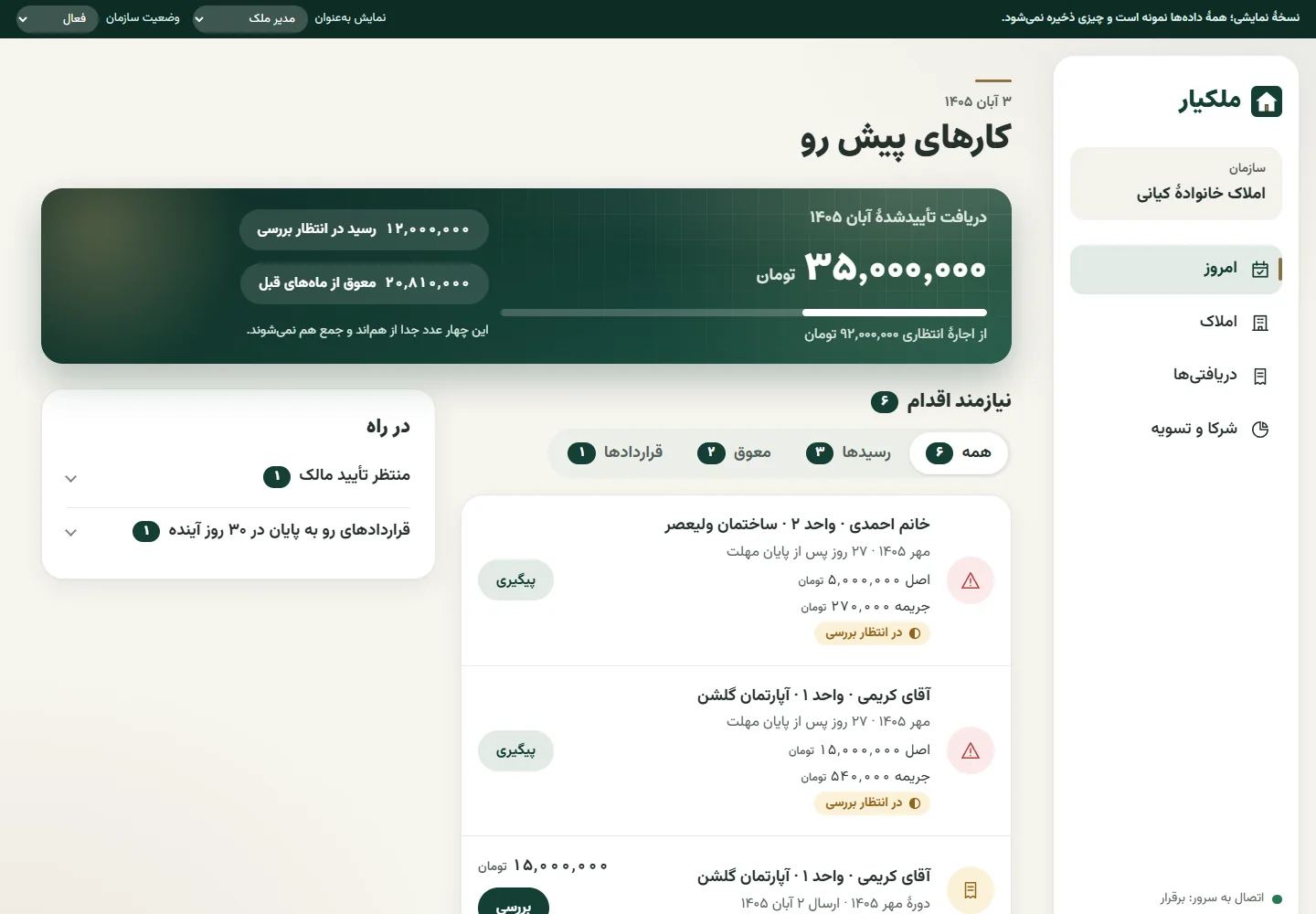 Open full capture ↗
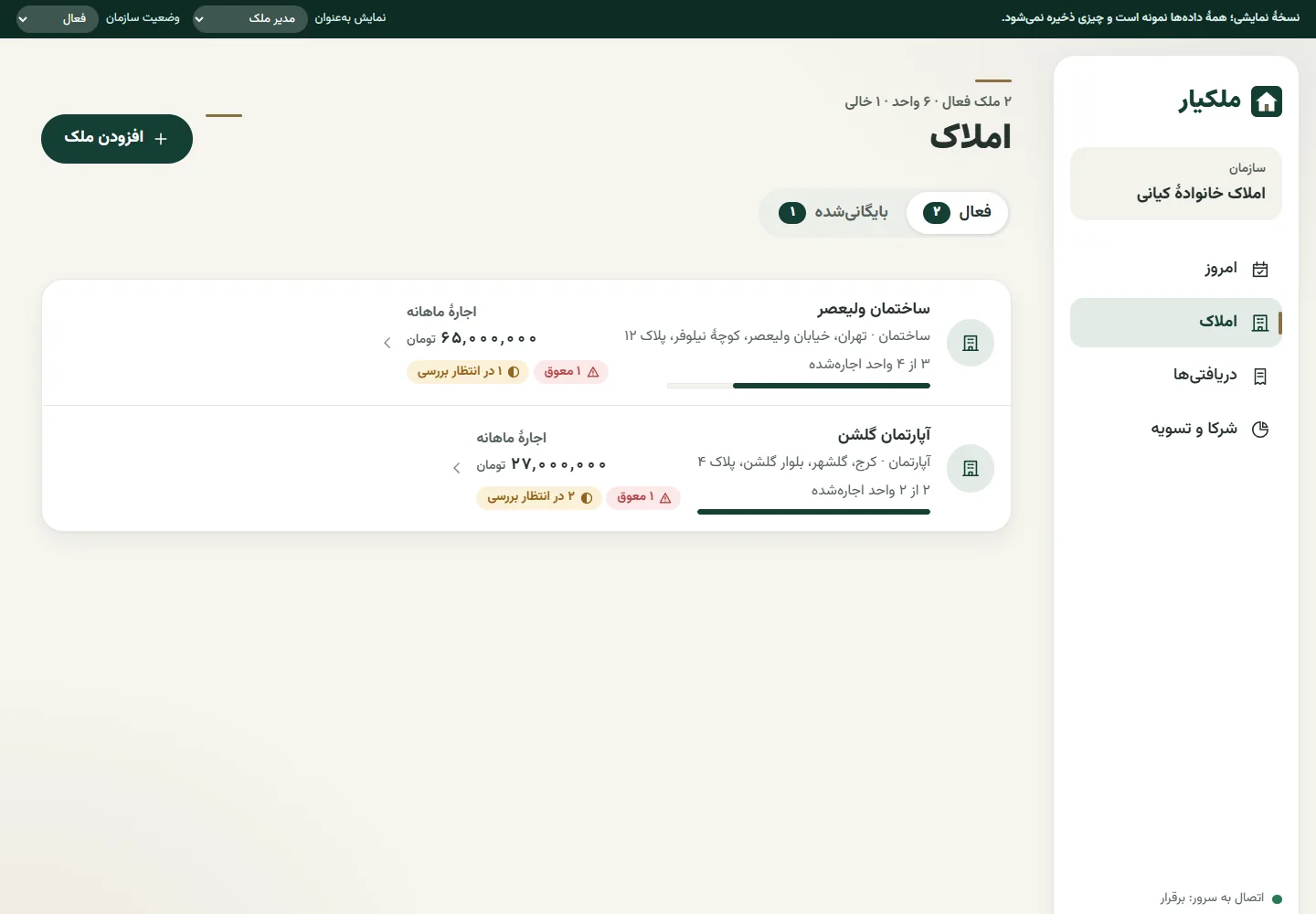 Open full capture ↗
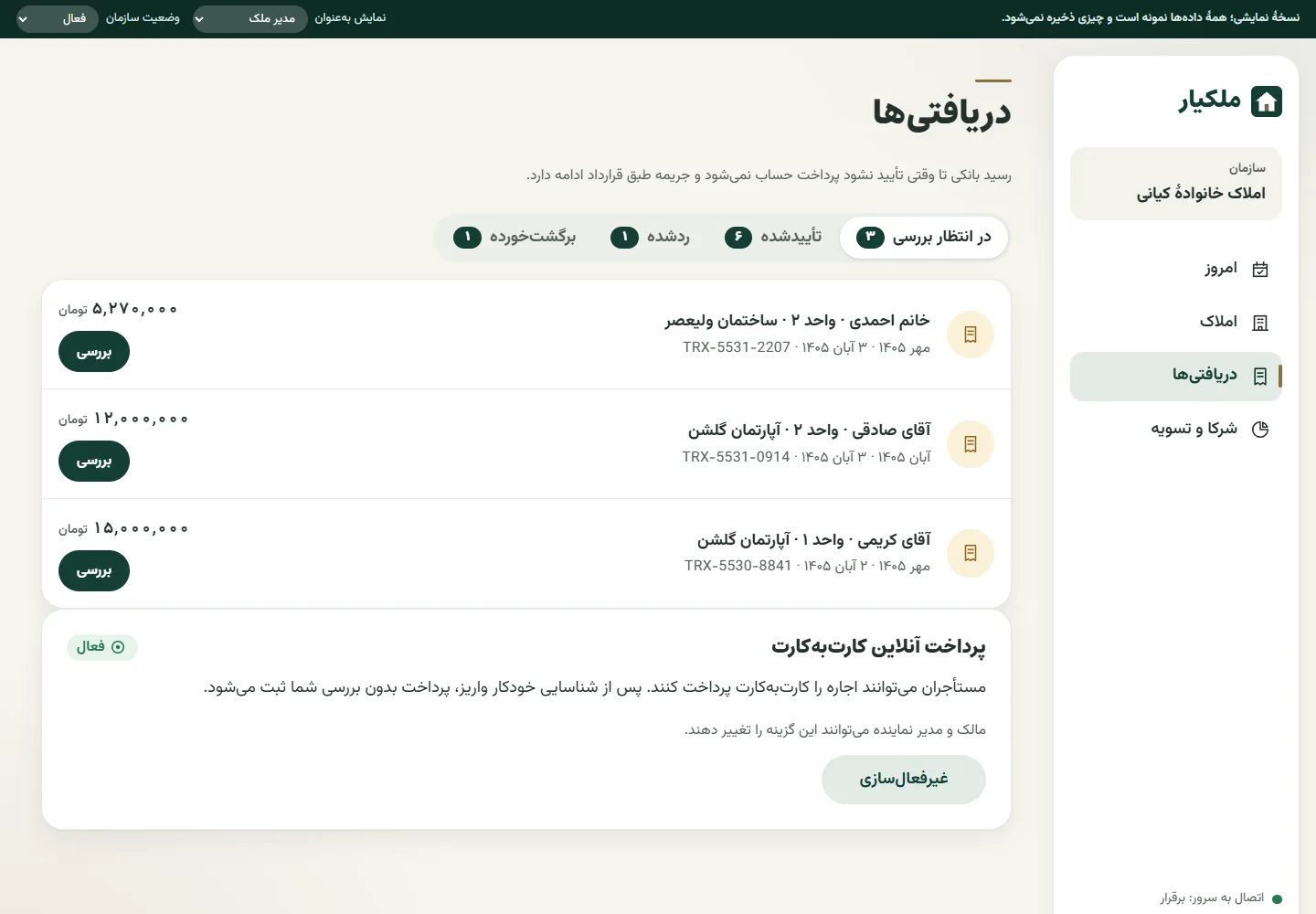 Open full capture ↗
Application architecture
- Web application
- React, TypeScript and Vite; role-specific views and API integration
- API & data
- NestJS, PostgreSQL and TypeORM in a separate backend application
- The seam
- OpenAPI contracts, typed requests with openapi-fetch, server state with TanStack Query
The daily work of property management
Melkyar focuses on the work around a rental agreement: which contract is active, what is due, which receipt needs approval, and who is responsible for the next step. Those are the questions the property-management workspace needs to answer.
The interface is Persian and right-to-left, with role-specific views rather than one panel for everyone. OpenAPI keeps the frontend and backend aligned as contracts, financial records and permissions change.
The current system
1Properties & contracts
Properties, units and tenants connect to the rental-contract lifecycle, rent schedules and obligations, so a contract sits beside the records it creates.
2Rent ledger & receipts
Rent obligations, recorded payments and reversals live in a ledger. Tenants can submit bank-transfer receipts for a manager to review.
3Expenses & maintenance
Shared expenses, bills, meters and maintenance requests belong in the same workspace as the property, rather than a separate trail of messages.
4Ownership & reports
Ownership records and partner statements sit alongside property reports, Excel exports and print views, keeping the financial picture available for review.
5Different roles, clear boundaries
Manager, tenant, partner and admin roles have different responsibilities. Organization membership, permissions and audit history support those boundaries across the application.
Where it stands
The frontend and backend contain these workflows. The images show the actual, older Melkyar design-review interface with demo data, not every current API-connected workflow or real customer records. Online payments, SMS/push delivery and server-generated PDFs are not presented as shipped features.